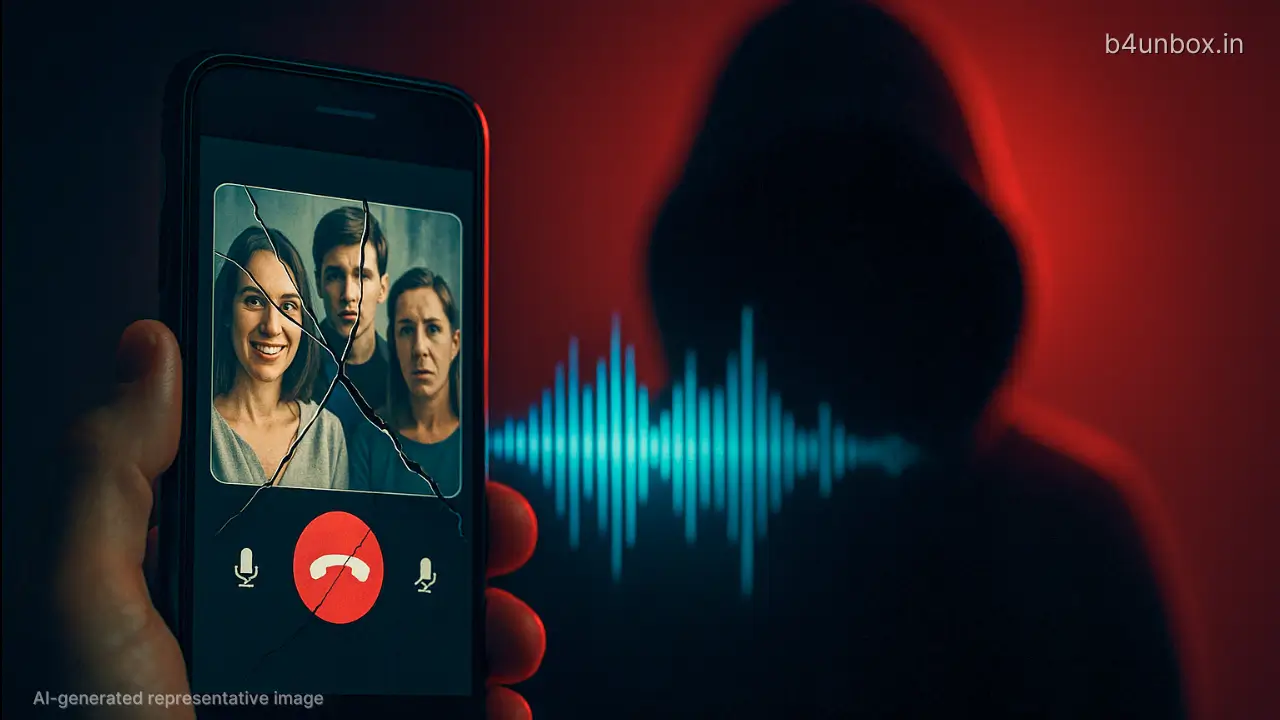
Online fraud in India is no longer limited to passwords or OTPs. Scammers have now found a new weapon — your own voice. Artificial Intelligence (AI) can clone your voice so perfectly that even your family might not recognize the difference. It’s not just a digital scam — it’s an emotional deception, targeting the deepest human trust.
Table of Contents
Click on any topic below to jump directly to that section.
- AI Generated Voice Fraud — Why Voice Cloning Is So Scary
- How Does This AI Voice Fraud Actually Work?
- Real-World Examples from India and Abroad
- Why India Is the Most Vulnerable Ground
- Can a 10–20 Second Voice Sample Really Be Enough?
- Emotional Manipulation — The Biggest Human Weakness
- The Final Reality — Can This Scam Grow Massively?
- How to Stay Safe — Practical Steps
- FAQs
AI Generated Voice Fraud — Why Voice Cloning Is So Scary
Voice is one of the strongest signals of trust. A child recognizes their mother by her voice; parents instantly trust their children’s tone.
AI voice cloning now copies tone, emotion, pitch, and accent with shocking accuracy — sometimes up to 99%.
That few seconds of emotional freeze when someone hears a familiar voice is enough for scammers to exploit. This small “trust gap” becomes their biggest opportunity to steal.
How Does This AI Voice Fraud Actually Work?
AI Generated Voice Fraud isn’t a hacking trick — it’s emotional engineering.Here’s how the scam works in simple steps:
1. Voice Sample Theft: Scammers collect your voice samples from social media — Reels, YouTube videos, vlogs, or WhatsApp voice notes.
2. AI Voice Cloning: The voice sample (as small as 10–20 seconds) is uploaded to an AI tool that clones your voice digitally.
3. Fake Emergency Call: The cloned voice calls your family or friends pretending to be you.
4. Emotional Script: Messages like “I met with an accident, please send money” or “my phone is not working, I need urgent help.”
5. Instant Money Transfer: Family members, emotionally shocked, often send money immediately without verifying.
Real-World Examples from India and Abroad
This isn’t just theory — it’s already happening. Let’s look at real examples from India and around the world:
Sunil Bharti Mittal Voice Clone Attempt: Scammers tried cloning the Airtel chairman’s voice to convince an executive to transfer money. Luckily, it was caught in time.
Indian Cases: In Hyderabad, a woman lost ₹1.4 lakh after a cloned “son’s voice” call. In Punjab and Lucknow, elderly people transferred money to fake voices of their relatives.
Global Cases: In the US, scammers cloned a daughter’s voice to fake a kidnapping and demand ransom.
In Europe, CEOs were tricked into transferring millions through cloned voice instructions.
Why India Is the Most Vulnerable Ground
India is a perfect ground for this scam because of three major factors:
1. Emotional Decision-Making: Strong family ties and emotional reactions make people act instantly.
2. Instant Payments via UPI: Quick transactions make it easy to send money before verifying.
3. Low Cyber Awareness: Most users don’t know about AI-based voice cloning threats.
When these three combine, India becomes one of the easiest targets for emotional scams.
Can a 10–20 Second Voice Sample Really Be Enough?
Yes. Many free public AI tools can clone a person’s voice with just a 10–20 second sample.
That means even short Reels, YouTube intros, or WhatsApp notes are enough for cloning.
Once the AI has your voice, it can generate any sentence in your tone and emotion.
Emotional Manipulation — The Biggest Human Weakness
Scammers don’t rely on technology alone — they exploit human emotions.The triggers they use are:
Fear (“I’m in trouble!”)
Urgency (“Send now!”)
Guilt (“You didn’t help me…”)
Panic (“It’s too late!”)
Pressure (“I’m counting on you!”)
This emotional manipulation shuts down logical thinking for a few seconds — and that’s all scammers need.
The Final Reality — Can This Scam Grow Massively?
Unfortunately, yes.
As AI tools become easier and cheaper, the number of scams will increase.
Every day, millions of Indians share their voices online, giving scammers free access to data.
Awareness is the only real defense right now — because once the voice is cloned, prevention is nearly impossible.
How to Stay Safe — Practical Steps
Here are simple, practical ways to protect yourself and your family:
1. Use a Secret Code Word: Decide a family “verification code” that must be spoken in emergencies. If someone doesn’t know it, hang up.
2. Always Double-Check: If someone calls for money, end the call and call back on their known number or through another app.
3. Follow the 10-Second Rule: Take 10 seconds to think before transferring money. Calm your emotions first.
4. Limit Voice Sharing: Avoid posting unnecessary voice or video clips publicly.
5. Set Banking Alerts: Activate instant alerts for every transaction, and verify unknown payees before sending money.
6. Report Immediately: In case of a scam, contact the Cyber Crime Helpline (1930) or report it on India’s official cybercrime portal.
Final Note: AI technology is powerful, but awareness is your first line of defense. Think twice before you share your voice publicly — and remember, a 10-second pause can save thousands of rupees.
FAQs
A: Yes. Modern AI tools can mimic tone, pitch, and emotional variation with up to 99% accuracy.
A: No. A short public audio clip is enough for cloning.
A: Sometimes, but fraudsters use VPNs and foreign numbers, making tracing difficult — prevention is better.
A: Yes. Many real cases have been reported in India and worldwide.
A: No. AI can clone any regional accent or language if there’s enough training data.
A: Use a family verification code and always confirm through an alternate call before transferring money.
